How can qualia be best explained?
Qualia is a Latin root, meaning'what sort' or 'what kind.' This type of vagueness in the definition is something that, to me, can be best grasped from approaching qualia in a different direction.
I'm currently reading Lessons from the Light, by Kenneth Ring, where he describes a patient who experienced a NDE who was blind from birth. It's difficult for us seeing folk to understand what being blind from birth would actually be like, but in hearing this woman's account, something became clear that should have been obvious to me. This patient, Vicki, remembers floating out of her body and experiencing the hospital room - actually seeing it. She then floated out of the hospital, and looked around at the city of Concord, where she was hospitalized. After this, she was shot through a tunnel, and the rest of her experience (actually, the entire thing), is like most other NDE's. What's interesting, and separates Vicki's account from others, is that she remembers seeing blood gushing out of body, but was unable to describe the color of the blood. It brings about the interesting concept of trying to describe a color without calling it the color itself, or relating it to another color. If you could use neither of these two things, how would you describe the 'redness' of blood?
There is a difference between colors, in this sense, and say, a book. If I am blind, I could still understand the concepts of 'smooth' and 'thin' and 'rectangular.' I feel the outline of a book, and I am told it is rectangular in its nature. I am told it's pages are thing. But how would I have the cover of the book, an illustration, described to me in colors?
Colors are a good example of qualia - especially obvious in relation to blind people. Vicki was able to recognize 'buildings' and 'rooms' and 'doctors' because she has heard them, and most importantly, felt them. She was able to recognize these things because she experiences them on a day-to-day basis, and upon actually seeing them, relate these experiences she has had to her new-found visual perception.
The problem with color, is that we only know color through relations. How can a blind person, who is able to see, understand color without it being related? If I see the world 'red' next to the color I perceive as red, I have then grasped the concept of 'red.' Or, in Vicki's case, if she is pushed to answer what color the blood was, she could say 'Well, it was the same color as a stop sign." But Vicki obviously, has no idea of what a stop sign being red actually means. She knows what a stop sign is, and she probably knows they are red, but the concept of 'redness' she is told to associate with that stop sign is completely absent.
And this brings us, I think, closer to seeing how qualia can be a problem for a materialist conception of the mind. If our mind can be reduced to the physical firing of neurons, in what sense could the firing of neurons ever amount to a color? In this sense, colors seem to be irreducible in nature. No doubt, our brains may have neurons associated with certain colors, but in what sense would these neuronal firings ever amount to 'blueness.' It could be argued that we only experience colors through objects, and when we imagine redness, we only imagine the redness insofar as we see a red object. But what Vicki's story shows us, is that only someone who is able to relate a stop sign to blood, and call the two red, must have an objective color in mind when they call the two red.
Showing posts with label Near-Death Experiences. Show all posts
Showing posts with label Near-Death Experiences. Show all posts
Saturday, March 24, 2012

Saturday, March 17, 2012
Book Review: The Light Beyond by Raymond Moody
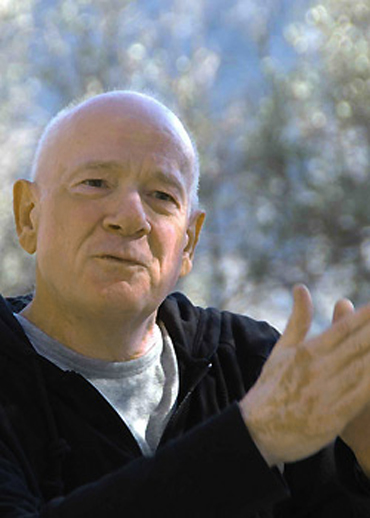

Summary:
Raymond Moody is known as the first person to really spend time investigating the phenomena that is the NDE. It seems fair to say that the NDE has gain widespread knowledge (and that's debatable), in the recent past. Moody wrote Life after Life in in the 70's, and since then, many other researchers have taken to looking deeper at the NDE. At the time, Moody had no idea how widespread the NDE was, and he also had no idea how much of a fascination it would stir. Moody mentions many times in The Light Beyond that we are naturally fascinated as to what happens after we die - and the stories we hear from these people are a potential glimpse into that reality.
Unlike Carter, Moody spends much less time speaking of naturalist interpretations of the NDE, but spends more time speaking about the impact the NDE has on the experiencers life. Moody expresses his personal opinion that while science may not have verified the NDE to the extent many people would like, he feels that the experience is legitimate. He is especially effected by the enormous impact it has on these peoples lives, and like many other researches, finds a certain 'high' from hearing these stories, and sharing in their new-found enthusiasm. He also feels that the verified out of body experiences that these people have had led him to believe the stories these people bring back are authentic.
It's interesting that these experiences have become much more prevalent over recent years, and once could interpret it several ways. Moody talks about times before his book Life after Life, and how Near-Death Experiencers were often told they were 'crazy,' and should just forget about what they claimed to have experienced. These people really needed someone to talk to, someone who understood what this experience is like, and the first wave of NDE researchers were able to provide these people with that support and attention. One of the big factors towards the prevalence of the NDE is the advance in modern medicine, and in particular, better resuscitation techniques. People are brought back much more frequently from the brink of death - and the advent of these advances is most likely a significant factor, as Moody thinks. Another potential reason could be the globalization of society. As the globe has become connected, its has become easier to see just how prevalent these experiences are, turning the NDE something that happened to a person or two you knew, to millions of people nationwide, according to a Gallup poll taken around the time of Life after Life. With the help of Moody and other researchers, people no longer feel scorned when they have these experiences, or embarrassed. Thus, one could attribute some of the influx of NDE's to this research, and how in Moody's opinion, people who were hiding this experience no longer felt that was necessary. Also, as Dr. Kenneth Ring has suggested, some NDE'ers think that these experiences are becoming more prevalent in recent years due to an attempt of the spirit world to make itself known. There is a wave of secularization that is taking hold, and this may be an attempt by this otherworld to add some fuel to a religious revival.
Whatever reason you feel is behind this new study, it's undebated that they have become a new, popular, phenomenon in recent years, and they certainly add some of the best evidence that consciousness can, in fact, survive death.
Some quotations, stories or key thoughts from The Light Beyond:
- Many NDE'ers come back with the message that the two most important things in this life are love and knowledge - and most NDE'ers more actively pursue these after their experience. These are the only things we can take with us into the afterlife.
- Moody feels, and I agree, that the skeptics serve their purpose. I find the evidence more than convincing, but without these skeptics, the investigation would not have been as thorough, and it would be hard to know just how convincing these incidents actually are.
- One man, who was angry at the person who resuscitated him, told him, 'I was mad because you brought me back to death instead of life.'
- One woman went to the waiting room during her OBE, to see her daughter wearing mismatching plaids. The maid, who brought the daughter, said she just grabbed the first two things she saw in their rush to get to the hospital.
- For those who have been in the business of studying these experiences a while, such as Ring and Moody, they have witnessed several instances of 'foresight,' where the experiencer is able to experience things that will happen years in the future.
- Moody notes that in twenty years as a NDE researcher, he has yet to find a NDE that hasn't had a positive effect on the persons life.
- NDE'ers exude a 'luminous serenity' from looking into the future and knowing everything is going to be all right.
- Many people feel the life review creates a sense of responsibility in their life after their NDE. They know at some point they will have to review the actions they took in their life, only they will feel the emotions of the people they impacted. As one NDE'er commented, she doesn't fear the review, she relishes in the sense of responsibility it creates.
- Many people become more spiritual, but not more religious. They feel that at the heart of religion, if you strip away the dogma and doctrine, is the spiritual aspect that often gets overlooked.
- Experts conclude that religious background doesn't alter the core of the NDE, just the interpretation of it.
- Kids younger than seven often are less surprised by their experience, because they just assume this what happens when people die.
- NDE'ers who are handicapped are surprised to find their handicaps gone when in the spiritual realm.
Wednesday, March 14, 2012
Debates over Near-Death Experiences
A couple days ago, I decided to debate a guy on an atheist blog about the actuality of the Near-Death Experience. It's been a fairly civil discussion thus far - although he's starting to repeat some of the same points, and continues to leave out some of the most valuable evidence regarding the Near-Death Experience. He has yet to respond to my last post - and I have a feeling he will resort to sophism and personal attacks pretty soon. The rate at which he makes 'blanket statements' about NDE's is becoming more frequent, leading me to believe he's getting frustrated. Here are some of the points he made regarding the NDE, and some of my responses. His initials are 'AA,' so that's what I'll call him here.
AA: The fact that the NDE experience varies per culture goes against the actuality of the Near-Death Experience.
My Response: First, AA continues to believe that the differences are far greater than they actually are. In doing research, it is really only Hindu's that tend to see things other than the standard elements of the NDE. Across North America, Europe, and China, the NDE is very consistent with it's core elements.
Even if we said there were differences - let us first examine the core experience, which usually involves a tunnel, life review, seeing a light, etc. The problem with saying it's a cultural phenomenon where people see what their culture's perception of death is, is that this doesn't match any preconceived notions of death people would have. He implies that it corresponds to religion, but nowhere in the Bible, that I know of, does it speak of us having an OBE, and hovering over our bodies after death, nor having a life-review, nor passing through a tunnel. Even the depiction of heaven given in revelation is far different than the typical NDE account.
The only thing that could be said about the NDE is that it's depiction of death is created by the NDE itself - but it's well known that persons who have not heard of the NDE are just as likely to experience it as those who haven't. It's also notoriously independent of religion, age, gender, and race (Ring, p.18). Even if many concessions are made, regarding the core experience of the NDE as a cultural phenomenon simply doesn't fit the evidence. Naturally - we can only expect some people to see different things, and interpret things based on their culture, but again, to claim it as a cultural phenomenon does not coincide with the evidence.
AA: Persons, like test pilots, sometimes experience OBE's, and other similar aspects of the NDE when not near-death. This is something the afterlife theory cannot account for.
My Response: The afterlife theory supposes that there is a 'spirit' or 'essence' that resides in our body, that detaches itself upon death. Obviously, this involves the assumption that the mind and body are separate entities. But if this is the case - we can expect our 'spirit' to leave our body in times when it perceives danger, but are not actually 'near death.' In fact - some people who have NDE's report leaving their body before actually undergoing biological death, like in the case of drowning. They report they sensed they were about to die, and left their body without having to experience the trouble of dying.
What I'm curious, is how does this fit into the dying brain hypothesis? If the brain is not 'dying,' then it should not be experiencing this separation if the explanation is of the physiological sort.
Other reasons why a physiological explanation is lacking, without resorting to individual problems with each theory:
-Take for the example, the tunnel. Some people experience a tunnel, some a door, some a staircase, some simply crossing a dark plain to the other realm. If a physiological explanation we're occurring, we should expect uniformity. How could a physiological explanation account for the broad aspect of 'crossing into another realm?'
- Whatever the explanation is - it must be utterly convincing, to the point where people are convinced beyond a doubt what they experienced was real. NDE's are able to decipher between these 'hallucinations' and their actual NDE.
Other points I have been making since the beginning, that he continues to ignore:
- Verified 'verdical' experiences (I can't fault him too much for this, because the only book he read is 25 years old, and is about the only materialist account available to explain away the NDE. Since this book has been written, many more corroborated 'verdical' experiences have been confirmed, which the author of the before mentioned book ignores - and later admits - are inexplicable)
- Significantly more cases where are not verified by hospital personnel, yet are reported by researchers such as Kenneth Ring and Raymond Moody in their books.
- Even more cases which patients claim to witness conversations remote from their body, which are later told to their family, which of course amazes them.
- Evidence for Death-Bed visions
- Evidence of 'foresight' reported by researchers (this evidence is weird stuff!).
- Many of the books on the subject are written by people who go into the NDE as actual 'skeptics,' only to change their mind, believing it can't be accounted for in naturalistic terms. Typically, only those who go in with the agenda to create a materialistic account (like Blackmore fully admits in her book) write negatively against the NDE.
As I continue to say, the explanatory scope is just not there for any competing theory, whether it be psychological or physiological. There are good reasons to reject other explanations, and the only theory that can account for verdical experiences is the afterlife theory. I'm going to continue to find atheists, and see if they can actually justify their claims that the NDE, and afterlife evidence in general, can be accounted for in naturalistic terms.
AA: The fact that the NDE experience varies per culture goes against the actuality of the Near-Death Experience.
My Response: First, AA continues to believe that the differences are far greater than they actually are. In doing research, it is really only Hindu's that tend to see things other than the standard elements of the NDE. Across North America, Europe, and China, the NDE is very consistent with it's core elements.
Even if we said there were differences - let us first examine the core experience, which usually involves a tunnel, life review, seeing a light, etc. The problem with saying it's a cultural phenomenon where people see what their culture's perception of death is, is that this doesn't match any preconceived notions of death people would have. He implies that it corresponds to religion, but nowhere in the Bible, that I know of, does it speak of us having an OBE, and hovering over our bodies after death, nor having a life-review, nor passing through a tunnel. Even the depiction of heaven given in revelation is far different than the typical NDE account.
The only thing that could be said about the NDE is that it's depiction of death is created by the NDE itself - but it's well known that persons who have not heard of the NDE are just as likely to experience it as those who haven't. It's also notoriously independent of religion, age, gender, and race (Ring, p.18). Even if many concessions are made, regarding the core experience of the NDE as a cultural phenomenon simply doesn't fit the evidence. Naturally - we can only expect some people to see different things, and interpret things based on their culture, but again, to claim it as a cultural phenomenon does not coincide with the evidence.
AA: Persons, like test pilots, sometimes experience OBE's, and other similar aspects of the NDE when not near-death. This is something the afterlife theory cannot account for.
My Response: The afterlife theory supposes that there is a 'spirit' or 'essence' that resides in our body, that detaches itself upon death. Obviously, this involves the assumption that the mind and body are separate entities. But if this is the case - we can expect our 'spirit' to leave our body in times when it perceives danger, but are not actually 'near death.' In fact - some people who have NDE's report leaving their body before actually undergoing biological death, like in the case of drowning. They report they sensed they were about to die, and left their body without having to experience the trouble of dying.
What I'm curious, is how does this fit into the dying brain hypothesis? If the brain is not 'dying,' then it should not be experiencing this separation if the explanation is of the physiological sort.
Other reasons why a physiological explanation is lacking, without resorting to individual problems with each theory:
-Take for the example, the tunnel. Some people experience a tunnel, some a door, some a staircase, some simply crossing a dark plain to the other realm. If a physiological explanation we're occurring, we should expect uniformity. How could a physiological explanation account for the broad aspect of 'crossing into another realm?'
- Whatever the explanation is - it must be utterly convincing, to the point where people are convinced beyond a doubt what they experienced was real. NDE's are able to decipher between these 'hallucinations' and their actual NDE.
Other points I have been making since the beginning, that he continues to ignore:
- Verified 'verdical' experiences (I can't fault him too much for this, because the only book he read is 25 years old, and is about the only materialist account available to explain away the NDE. Since this book has been written, many more corroborated 'verdical' experiences have been confirmed, which the author of the before mentioned book ignores - and later admits - are inexplicable)
- Significantly more cases where are not verified by hospital personnel, yet are reported by researchers such as Kenneth Ring and Raymond Moody in their books.
- Even more cases which patients claim to witness conversations remote from their body, which are later told to their family, which of course amazes them.
- Evidence for Death-Bed visions
- Evidence of 'foresight' reported by researchers (this evidence is weird stuff!).
- Many of the books on the subject are written by people who go into the NDE as actual 'skeptics,' only to change their mind, believing it can't be accounted for in naturalistic terms. Typically, only those who go in with the agenda to create a materialistic account (like Blackmore fully admits in her book) write negatively against the NDE.
As I continue to say, the explanatory scope is just not there for any competing theory, whether it be psychological or physiological. There are good reasons to reject other explanations, and the only theory that can account for verdical experiences is the afterlife theory. I'm going to continue to find atheists, and see if they can actually justify their claims that the NDE, and afterlife evidence in general, can be accounted for in naturalistic terms.
Saturday, March 3, 2012
Book Review - "Science and the Near-Death Experience"


Summary:
In Science and the Near-Death Experience, Chris Carter lays out his arguments for why Near-Death Experiences constitute a powerful reason to believe that life continues after death. The book is divided into three sections, with the first section showing that while consciousness and the brain are no doubt intertwined, a 'transmitter-receiver' hypotheses for the function of the brain is at least plausible. In this first section, he discusses the implications of quantum mechanics, and discusses the 'transmitter-receiver' hypothesis alongside the implications of the more standard 'production' hypothesis. In the second section, Carter delves into the Near-Death experience. He first goes over the basic statistics of the NDE, and then the symptoms that are generally reported. He then discusses the materialistic objections to NDE's, and notes why he thinks each of these objections fail. In the final section of the book, Carter talks about Deathbed Visions, and the implications of this phenomena.
To start off, Carter goes over the standard arguments that are used to convince someone that the 'production' hypothesis is better than the 'transmitter-receiver' hypothesis. Corliss Lamont, former president of the American Humanist Association, makes the following points:
- In the evolutionary process, the versatility of living forms increases with the development of their nervous system
- The mind matures and ages with the growth and decay of the body
- Alcohol, caffeine, and other drugs affect the mind
- Destruction of brain tissue, or a blow to the head will cause impaired, or a loss of, mind function
- One can trigger memories by exciting certain parts of the brain
In all of the above scenarios, however, the transmission hypothesis makes sense in the same way the production hypothesis does. If the brain transmits the signal produced by an immaterial mind to the body, then it makes sense that with the decay of the brain, the mind will be forced to process information slower than if it had a healthy transmitter. The same will work for most of these objections to dualism, or the transmission hypothesis - it is at least logically possible that transmission works.
(For the last objection - the analogy of a cell-phone works well. If one triggers certain parts of the brain - one can induce past memories. But if someone presses the same digits on a cell phone repeatedly, that person could conclude (wrongly) that since the same voice is heard each time, that the cell phone actually produces that voice when a certain sequence of numbers is pressed.)
At this point, it seems reasonable to think - why would we choose the transmission hypothesis when the production one seems much more reasonable? William James talked about this in 1898, saying that the transmission hypothesis may seem fantastic, but the same could be said about the production hypothesis. It's difficult to imagine how mental states can be reduced to biochemical activity in the brain (James is speaking of Reductionist Materialism, as opposed to Eliminative Materialism, which says certain mental states simply don't exist.) James came to the conclusion that the brain is an organ for limiting the mental activity produced by the mind. Furthermore - phenomena such as telepathy, remote viewing, clairvoyance, and Near-Death Experiences would merely be times that the limitations of the brain were lowered (or all-together removed) if the transmission hypothesis is correct - while they are inexplicable under the production hypothesis.
Carter then discusses the implications of quantum mechanics - and how theories for a dualistic interaction have been proposed as a result. One of the main problems with dualism is imagining how an immaterial mind could interact with a material brain. But if the implications of quantum mechanics are as they seem (or at the very least - if the placebo effect is a real thing), then we can see instances of the mind effecting the body, at both the macro- and microscopic level. I gave a quick overview of Carter's quantum mechanics section in my post here.
In section two, Carter first delves into the basic symptoms related to the NDE. These are, in Western accounts, as follows in order of decreasing commonality: A feeling of peace or joy, an out-of-body experience or OBE, encountering a light, meeting deceased relatives, entering an unearthly realm, passing through a dark tunnel, a life review. Carter then discusses each one of the above in detail - using quotes from NDE's to elaborate on how these people feel as they experience their NDE. He also talks about some of the after effects of NDE's. Typically, those who have a NDE feel it is the most significant event of their lives. While it is somewhat controversial as to what causes the NDE, the effects a NDE has on the persons life are well known. The person having a NDE usually experiences the following afterwards: a thirst for knowledge, increased compassion for others, reduced competitiveness, reduced interest in material possessions, increased interest in spirituality, greater appreciation for life and finally a greatly decreased fear of death. It should also be noted that while the symptoms of NDE's seem to relate to principles taught by religion, such as Christianity, people typically become less dogmatic in their religious practice, but increasingly spiritual in their nature. The NDE is thought to be completely independent of race, age, culture, or gender. While the symptoms of a NDE will vary slightly from culture to culture, the core experience is typically fairly constant.
Carter then discusses the common objections, both psychological and physiological, which i'll reiterate here:
Wishful Thinking: This would suggest that people who fear death, or have a strong religious belief would be more likely to have a NDE. The evidence doesn't support this, however. People who have never heard of NDE's report the same kinds of experiences as those who are familiar with NDE's. NDE's are reported by people who did not expect to die, leaving them no time to conjure up an imaginative scenario. Also, children who are too young to have knowledge of NDE's, or even religious training, have reported NDE's. Furthermore, sheer numbers suggest something more than merely wishful thinking may be at play.
Dissociated States: Upon severe psychological stress, the body sometimes uses a defense mechanism where it dissociates itself with the body. There are several sub-categories of this, however, the main problem here is that many cases of NDE's involve people who were not aware they were about to die, and thus not under the psychological stress needed for this theory to work. Also, this would account for the OBE, perhaps, but it'd be hard to imagine it accounting for the other symptoms.
Imaginative Reconstructions: Some think that the reconstructions medical persons working on their body is nothing more than recalling previous hospital experiences or medical dramas. This hypothesis would only account for the OBE, or feeling of watching one's operation. This was tested by having observers in the corner of an operation room to watch an operation, and then recalling details, compared with those who underwent a NDE and their analysis of their own operation. 80% of the subjects placed in the corner made at least one error in describing the resuscitation technique, despite physically watching it and feeling confident of what they saw. In contrast, not one of the 32 NDE survivors made a mistake in recalling their own hospital experience.
Semiconscious Perception: This deals with the possibility that people who recall things about their operation are actually somewhat perceptive during this time. However, those who have had a NDE typically distinguish between seeing things and feeling the operation itself. People report seeing themselves jolt, but not feeling the shock itself. Also, using hypnosis, people are sometimes able to recall auditory aspects of their operation, but never visual. Third, people who have had perception during an operation, as well as a NDE, are easily able to distinguish between the two experiences. Also, people have reported NDE's when nobody else was present in the room to say anything.
Endorphins: Endorphins have been proposed to account for the feeling of peace and painlessness during the NDE. However, pain-killers like endorphins have effects that last for twenty to seventy hours, while those have a NDE typically feel pain as soon as the experience ends. This hypothesis is difficult to test, and it's possible that small amounts could be emitted that to last only five to ten minutes, but the problem is the instantaneous pain return reported by many NDE's when they re-enter their body. Also, there is no evidence that the brain produces and secretes this chemical when near-death.
Oxygen Starvation (anoxia): As blood flow to the brain is decreased, a set of phenomena will be experienced by the individual. Typically those who experience anoxia have mental laziness, heightened irritability, difficulties in concentrating and difficulty remembering. This is in stark contrast to the NDE, which is usually remembered vividly and accompanied by heightened perception. Also, in a study done in 2001, a blood sample was taken from those who where near-death and had a NDE, and those near-death who did not have a NDE. The study found that those who had the NDE actually had higher oxygen levels in their blood.
Excessive Carbon Dioxide: It is argued that excessive carbon dioxide to the brain causes the NDE. Upon first examination - many of the symptoms of excessive carbon dioxide are similar with NDE's. However, there are problems with this model. First, other elements are common that are not with the NDE, such as brightly colored geometric patterns, fantasized objects like musical notes, and seeing in duplicate or triplicate. Also - carbon dioxide will cause convulsive behavior in extreme cases. Furthermore, any intensive care unit would not tolerate a build-up of carbon dioxide in the blood of a patient experiencing a heard-attack, thus ruling out NDE's experienced by those patients. Furthermore, research done has noted the same thing with anoxia - that blood samples of NDE'rs disprove this hypothesis. Cases have been noted where carbon dioxide is lower than normal in cases where the patient experiences a NDE.
Temporal Lobe Seizures: According to a study by Michael Persinger, temporal lobe seizures can account for all the experiences of a NDE, including being pulled towards a light, floating, profound meaning, and hearing beautiful music. However, it failed to admit that the most common aspects of the study found patients felt 'dizzy or odd,' 'tingling sensations,' and 'vibrations in body.' Actually, the most common things found are things not reported in NDE's, which experiences from a NDE reported less frequently. Furthermore, this research has been dealt a blow when subsequent studies attempted to recreate the data produced by Persinger have found no correlation between temporal lobe seizures and the typical symptoms of the NDE.
Ketamine: The best theory for a naturalistic explanation comes from taking the drug ketamine, where people reported feeling out of body, universal significance, and other common aspects with the NDE. This rests on two assumptions: first, that the brain produces a ketamine like chemical when dying, and second, that the experience closely resembles a NDE. Carter talks a lot about Ketamine, as many people who have done experimentation with ketamine feel that it can actually detach the mind from the brain, producing a genuine NDE. However, there are also many instances of horrific experiences while taking ketamine, and people who have had a NDE and then take ketamine will note the experiences are very different.
Michael Sabom, who went into NDE studies to debunk reports of people genuinely feeling what they claim to experience, now thinks that no explanation brought forward can account for the experience of the NDE, and now considers them likely authentic.
Carter wraps up his discussion on NDE's by going over what, in my opinion, is the death blow to naturalistic explanations. NDE's, by their nature, are hard to test, but there are several documented cases where people experience things otherwise impossible to experience - which is later verified by hospital personnel. He also discusses how many more people who do not have their experience verified claim to experience conversations remote from their body. These 'verdical' experiences are the best evidence towards any naturalistic explanation being implausible, and point towards the NDE being authentic. Many naturalistic explanations seek to disregard the data that seems inexplicable, and focus solely on the data that could be conceivably explained away, even though no present model can account for all symptoms. However, if we hold that these verdical experiences are genuine, the only conclusion, it would seem, is that the mind and brain, while closely linked, become separated upon death.
In the final section of his book, Carter goes over the Deathbed Vision, which typically consists of a person seeing deceased relatives that escort them away from their life on earth. Skeptics will claim these to be wishful thinking, but there are instances where the person does not expect to see someone, and seems surprised by what they see. Furthermore, oftentimes the dying patient will fight against his visions, not wanting to be taken away by these unwelcome visitors.
Perhaps even better evidence is the consistency in which only deceased relatives are seen. In some instances, the person will see their parents, as well as a sister or brother who they believe to be alive, and are confused by this. There are cases where this person they see is in fact dead, however, and the information is withheld from the dying patient so not to upset them.
Carter, like many others who research the afterlife, come to the conclusion that the best, and perhaps only reasonable, hypothesis is that these instances are actually what they appear to be. He believes that no naturalistic explanation can account for the similarities experienced, much less the verdical experiences. He believes the evidence, if looked at in an unbiased manner, will be overwhelming in evidence of survival.
My take:
There are many types of arguments used to prove the existence of God, or at the very least the immortality of the soul, but I feel that aside from personal Divine Revelation, the NDE, as well as afterlife research in general, is about as close to 'knowing' as we can get. Here are some of the reasons I feel this way.
For naturalism to make sense of NDE's:
- 'Verdical' near-death experiences, or those verified by hospital personnel, need to be sheer dumb luck.
- Other cases that aren't verified, where the NDE'r experiences things remote from their body need to be fraud.
- Since almost all NDE's believe their experience to be authentic, they need to be deceived in some way, so convincingly, that they fully believe what they experienced.
I'm sure one can add more to the above list, but the evidence for the afterlife is, in my opinion, nothing less than staggering. Carter ends his book by saying that his next book will deal with evidence for mediumship and reincarnation - which he believes to be even more strong than the NDE evidence (I have trouble imagining how!). If there was no such thing as the NDE, I think I would have a hard time believing that life after death existed. Fortunately - such evidence does exist. If there is life after death, then we should expect to see exactly what we do.
Most importantly, the information about life after death is such a comfort. People who have a NDE almost never fear death, and as a result live their life so much more stress-free. While society makes a big deal of death, people who have underwent this experience don't feel that way at all - in fact some look forward to it. Since this information is available, I think we should take it and live life unafraid of death, knowing it's just the end of life here, and the start of a much deeper existence.
Friday, February 17, 2012
Mind over Matter - Quantum Theory and the Mind
"If a person does not feel shocked when he first encounters quantum theory, he has not understood a word of it." - Niels Bohr, Physicist
Part of the staying power of naturalism can probably be attributed to the absolutely bizarre conclusions quantum theory leads us to. Many naturalists maintain a bottom up definition of physics, which has the brain as a series of physical causes and effects, just like everything else in nature - which renders consciousness a bi-product of evolution, and free will an illusion. However with the establishment of quantum theory in the early 1900's, and it's development over the 20th century by later physicists, mankind has been led to new insight in the mind-body problem, as well as a completely new view on the operation of the universe.
Newtonian physics was based on determinism, the assumption that an observer did not effect a system being observed. Thus, in classical, Newtonian physics, the mind was rendered moot - and for those who wanted to have both, the mind had to be viewed as something physics could not effect. While Newtonian physics is a good approximation at the macroscopic level, quantum mechanics is physics at the microscopic level. Perhaps the most shocking part of quantum mechanics is this: attributes associated to subatomic particles, such as spin, direction, and momentum are not just unknown until measured, they do not exist in any definite state until measured. All subatomic particles exhibit this phenomena: when observed, they will behave as a particle, with measurable attributes. When unobserved, they will behave as a wave, with attributes only approximated by the Wave Function, which can predict where the electron may be. In other words, the electron does not have a definite location until observed, which corresponds with the collapsing of the Wave Function into measurable attributes.
This leads us to a new conclusion, one presented by physicist and mathematician John Von Neumann. According to Von Neumann, since all of material existence is quantum mechanical, the process that collapses the Wave Function must be something immaterial. Von Neumann reluctantly concluded the first interaction that particles could have with something immaterial, in theory, would be consciousness, or the mind. Throughout the late 1900's, experiments were done to see not just if consciousness could effect matter, but if it could control it in any measurable sense. Using Random Event Generator experiments, Helmut Schmidt tested whether a person could will the results to be anything other than pure chance. A huge database was collected, and it was discovered that the event an observer willed occurred approximately 51% of the time. Due to the huge number of tests, the odds of this happening were around one in one trillion due to simply pure chance. Due to this, as well as other subsequent experiments, quantum mechanics brought the effect of the mind back into popular physics.
Another odd effect, which will come into play when discussing mind-brain interaction, is the Zeno effect. Physicists have found that if they observe an unstable particle, it will never decay. In other words, physicists can 'freeze' an unstable system by continuous observation. Atoms are no longer thought of us impenetrable balls, but rather as probabilities. With this new conception of matter, physicist James Jeans wrote
"The universe begins to look more like a great thought than like a machine."
Most importantly, quantum mechanics has lead to new, interesting theories of mind-body interaction, most of which are dualistic and can accurately account for phenomena observed. Because it is now accepted in orthodox quantum mechanics that observation plays a role (other proposals, such as unknown variables, multiple worlds, etc, are less popular), the interaction between mind and brain can be better understood - the gap between mind and brain can be better explained without resorting to throwing away free will. According to Henry Strapp, the mind can concentrate for a given period of time and create a brain state that will be a 'template for action,' or voluntary motion. This can be shown in examples such as weigh-lifting, when the force able to be exerted is less when the mind is distracted. In other words, utilizing the Zeno effect, the mind can force a certain template to be held, allowing action to take place. This theory is further developed by Evan Walker, who breaks processes down even further, to the level of the electron itself. These theories all involve a dualistic nature of the mind, or a non-material entity which is able to effect the probabilities of atomic motion.
According to Chris Carter, author of Science and the Near-Death Experience, the only objections to the newly developed and dualistic theories are non-physicists who continue to hold onto a materialistic understanding. Others, due to philosophical reasons, think these new theories should be replaced by ones that render consciousness causally inert - reducing electron movement to pure randomness yet again. He feels neither of these has any rational basis in contemporary science.
This new dualistic understanding can account for phenomena such as the placebo effect, where a medicine is more effective than it should be in healing the patient due to one's feeling that the medicine is in fact helping. It can also allow us to understand phenomena such as the NDE, and psychic abilities. Although physicists will not contend on whether the mind can exist without the brain, this new dualistic philosophy of the mind, grounded in physics, changes the way one perceives human interaction with the environment.
I read once that Stephen Hawking believed the universe could have spawned from the collapse of an equation due to consciousness, similar to that of the Wave Equation collapsing when observed. This brings up two questions: Who put that equation there? And even more startling - who looked at it?
Thursday, February 16, 2012
The Message from Outside the Cave
In Plato's Allegory of the Cave, he talks of society as persons in a cave, staring at shadows on the wall. The philosopher is like the person who steps outside of the cave, and is able to see the light, bringing a message from beyond. For a Near-Death experiencer, they too are able to see outside the cave that is this world, and they can only hope that those inside the cave are willing to accept what they have seen.
The following is the Foreword in Science and the Near-Death Experience. The book is written by Christ Carter, and the Foreword is written by Neal Grossman. It's a great message to hear, and I hope you can enjoy it:
The following is the Foreword in Science and the Near-Death Experience. The book is written by Christ Carter, and the Foreword is written by Neal Grossman. It's a great message to hear, and I hope you can enjoy it:
"Thus far, I have been regarding the materialism paradigm as on a par with other such paradigms that have been overturned in the course of the history of science, but I believe that there is something rather special and different about the present situation. There is a message hidden in all this research, and it is a message that successful academics do not wish to hear. The message is universal love. Every near-death experiencer is convinced that the purpose of life is to grow in our ability to give and receive love. And NDE researches - as well as mediumship researchers - have themselves come to this same conclusion, but academic life is the opposite of loving.
Both science and academia are organized around the same principles that structure the corporate world: success in one's career depends a little on talent, but mostly on competition, self-promotion, and so forth, that is, on personality traits that have little to do with curiosity, intelligence, or intellectual honesty, to say nothing of love. Those who have been most successful at this - the ones who control the journals, decide who gets funding, decide who gets tenure - hold power in science and academia because of personality qualities that are opposed to the message of universal love. They believe, and need to believe, that the purpose of life is to "win," to be successful and influential in their field of study.
Many academics would be horrified to learn what all near-death experiences have learned. A successful life is not measured by fame, prestige, wealth, or number of publications; it is measured by how we treat one another, by our ability to live according to the golden rule, and by growth in our ability to feel compassion for others."
Wednesday, February 15, 2012
Who Will Guard the Guards?
"Atheism is a disease of the soul before it becomes an error of understanding....."
-Plato
A skeptic is someone who questions the truthfulness of a given assertion. And the more radical the assertion, the more overwhelming the evidence has to be. These people are the hypothetical 'guards' to the truth, - guarding it from the bogus claims of potentially religious fanatics. The problem is, while these guards are meant to challenge controversial assertions of those enslaved to an ideology, they themselves have become enslaved the the ideology of naturalism. Claims are no longer viewed in a serious scientific light, but rather scrutinized under the assumption from the get-go that they must be false, and any justification they can give is better than what these people claim to have seen or experienced. Nowhere is this ideology more prevalent than in the assessment of Near-Death experiences.
When one thinks of religion, one typically assumes some type of belief in the afterlife. To many, this belief is viewed as wishful thinking, and it shows how fearful people are of death. Because of this fear, religions created the concept of the 'soul,' which survives after death - which they will say has absolutely no bearing on reality, and is completely a man-made invention. However, with globalization, the commonality of near-death experiences, as well as their striking similarities have been revealed for all, sparking a new sect of scientific (in some cases pseudo-scientific) research into the actual possibility that life-after-death may in fact be.
Approximately 5% of the population have experienced either a NDE or OBE (out-of-body experience). For people who are actually 'near-death,' approximately 1/3 have a NDE, and this number is probably is low, for reasons you can read about here. NDE's occur across all cultures, all races, and can be seen in documentation in various cultures throughout history. There are around eleven common elements of NDE's, and the usual person experiences around six to seven of these elements. The experience usually includes some variety of the following: a great being of light (this is the most prevalent, and powerful element in NDE accounts), a tunnel-like sequence, talking to deceased loved ones, feeling extremely loved, feeling like they are returning home, heightened perception, a life-review, communicating with religious figures, and being told they must (or can choose) to return to their body. The NDE'r typically does not fear death after his or her NDE, and actually welcomes it, seeing it as merely 'biological death.' The NDE'r usually becomes much more 'spiritual' as a result of their experience. Perhaps most importantly is that the NDE'r usually does not doubt that what they experienced was real, and does not believe that they were hallucinating.
Now the first response would be to ask if we can believe what these people are telling us. The obvious problem is the huge number of people who have experienced this, as well as the commonality most experiences share. If I told you I saw a polar bear in downtown Telford, you would probably be skeptical - and for good reason. If millions of people told you they saw that polar bear, it would be unreasonable to conclude they are all lying. The only way there wasn't a polar bear in downtown Telford is if these people, in one way or another, are deceived.
The next set of theories attempts to provide a naturalistic explanation for NDE's. You don't have to go far, however, before it becomes clear that a naturalistic explanation just cant solve all of these experiences. For example, take a NDE'r or OBE'r who follows his family around the hospital and sits with them in the cafeteria while they eat lunch, and after the NDE'r is healed, they proceed to tell their family the conversations they had while the NDE'r was in a coma. One could argue that this NDE'r could be imagining all of this, even though they are seeminly flat-lining, but one cannot explain in any naturalistic sense how a conversation taking place far away from their body could be overheard, and accurately retold. Once we realize that naturalism cannot explain this, the rest of the phenomena, which otherwise must be explained as some type of delusion, make much more sense. Does it seem realistic for those who are hallucinating to experience heightened perception? And if these people are hallucinating, wouldn't one expect them to at least by cynical as to what they've experienced?
This same type of skepticism is what produces Christ-Myth theories. If we are to believe that Christ didn't exist, then we have no more reason to believe that just about anyone before the time of Christ existed. We have reference to the historical Jesus is the accounts of Josephus, as well as later Roman Emperors to corroborate with the evidence given in the Bible. If the same set of scientific and historical standards were applied to evolution and Alexander the Great, we would feel completely different the actuality of both of these things. Historians who approach the historical Jesus without bias are able to recognize this, as seen in the video below:
The above examples lead me to believe that anyone who approaches the question of God with an open heart will find reason to believe in God. Many of the greatest minds throughout history, such as Plato, Aristotle, Socrates, Kant, Aquinas, and Descartes were all theists in one way or another, so you're in good company (Aristotle is questionable, as he believed in a 'Prime Mover'). There are many reasons to believe in God, or merely to believe naturalism is false, as I think NDE's clearly provides, and I think those who approach spirituality as actual skeptics will be rewarded with the evidence available.
Sunday, February 12, 2012
Near-Death Experiences
I wanted to post something on Near-Death Experiences (NDE's), to help add another piece of the evidence not only that naturalism is false, that a 'soul' or 'mind' exist, but also as evidence for God and the possibility of the afterlife. There is a good summary here that talks about some of the current understanding of NDE's. Here are some of the basic points:
-There are approximately thirteen to fourteen million people in the United States, (2% of the population) and at least fifteen million more around the world that have had an experience defined as a “near-death experience”
- There are eleven basic elements in NDE's. Nobody experiences all of them, but people usually experience six to seven.
-Numerous people have told of hearing or watching their doctors or other spectators, declare or pronounce them dead. Often they feel like they are another person in the room somewhere, watching the whole thing like a spectator, but being unable to feel anything associated with their own body.
-The existence of light is probably the most common and dominant element in the accounts of NDEs. It is this, which has the most profound effect upon the individual being.
-The love and warmth which ‘emanate' from this light are beyond words.
-Astonishingly, many people describe the light as having a personality. People recount it having a sense of humor, and it being fun to be around. A little girl who died in a swimming pool, and who then told about her experience simply said, “You'll see, heaven is fun”
-When one dies, reviews ones are commonly recounted. The review is usually in the form of a ‘movie' which will show some irrelevant and some significant things about one's life. Watching the review is just like being part of it, standing there in the scene as a spectator.
-In many cases, various unusual sensations are reported to occur at or near death; sometimes they are extremely unpleasant. Often it is a really loud, uncomfortable buzzing noise that rings, or other times it is the experience of intense unpleasant feelings. “I had the feeling of being lonesome… I was completely alone, by myself… I really felt a fit of depression then."
And perhaps best of all,
here is a report which outlines NDE's, what happens during them, and goes over why all other skeptical explanations simply fall short of adequetly explaining this phenomena.
-There are approximately thirteen to fourteen million people in the United States, (2% of the population) and at least fifteen million more around the world that have had an experience defined as a “near-death experience”
- There are eleven basic elements in NDE's. Nobody experiences all of them, but people usually experience six to seven.
-Numerous people have told of hearing or watching their doctors or other spectators, declare or pronounce them dead. Often they feel like they are another person in the room somewhere, watching the whole thing like a spectator, but being unable to feel anything associated with their own body.
-The existence of light is probably the most common and dominant element in the accounts of NDEs. It is this, which has the most profound effect upon the individual being.
-The love and warmth which ‘emanate' from this light are beyond words.
-Astonishingly, many people describe the light as having a personality. People recount it having a sense of humor, and it being fun to be around. A little girl who died in a swimming pool, and who then told about her experience simply said, “You'll see, heaven is fun”
-When one dies, reviews ones are commonly recounted. The review is usually in the form of a ‘movie' which will show some irrelevant and some significant things about one's life. Watching the review is just like being part of it, standing there in the scene as a spectator.
-In many cases, various unusual sensations are reported to occur at or near death; sometimes they are extremely unpleasant. Often it is a really loud, uncomfortable buzzing noise that rings, or other times it is the experience of intense unpleasant feelings. “I had the feeling of being lonesome… I was completely alone, by myself… I really felt a fit of depression then."
-This could be a form of what many religions call ‘hell'. These experiences seem to be much rarer, but maybe they are just so uncommon because people feel uncomfortable talking about them since they are hell-like and may indicate that the person has lived a bad life.
-“In the presence of the light, the thoughts or words came into my mind: ‘Do you want to die?' And I replied that I didn't know since I knew nothing about death. Then the white light said, ‘Come over this line and you will learn.'… As I crossed the line, the most wonderful feelings came over me - feelings of peace, tranquility, a vanishing of all worries."
-This experience shows how life and life after death are separated, and how the experiences people have, are just an inter-phase to life after death.
-The people that had NDEs also get a totally new picture of what death is like! Most of the time they enjoy it so much that they are not even afraid of dying - not a single bit.
What I find most impressive about all these experiences are the number of persons who experience them, and also just how convinced they are themselves that what they've seen is real. I think it's foolish to say that all of these millions of people are simply 'making it up.' It's possible it's a type of hallucination, but given the similarities between the experiences, as well as how convinced the people are of what they've seen, I'd say this is all remarkable evidence. Here is an archive over on SubmersiveThinking that has NDE's in video, if you want to judge for youself. Also, here is a list of quotes from persons having NDE's and what they've meant to them.
It's also important to note that the afterlife has been a common aspect in religion for a long time. Although it's been depicted differently from religion to religion, it usually revolves around common elements that seem to transcend religion. Perhaps NDE's, as has been suggested, have inspired and helped evolve not only past religions, but religions perception of the afterlife, and what's in store for us. Perhaps these images of light have helped humankind throughout history modify their image of God to one closer to reality.
Dr. Kenneth Ring, perhaps the most respected of all near-death researchers, and the one who did most to put the subject on the academic map, says:
"Any adequate neurological explanation would have to be capable of showing how the entire complex of phenomena associated with the core experience [that is, the out-of-body state, paranormal knowledge, the tunnel, the golden light, the voice or presence, the appearance of deceased relatives, beautiful vistas, and so forth] would be expected to occur in subjectively authentic fashion as a consequence of specific neurological events triggered by the approach of death ... I am tempted to argue that the burden of proof has now shifted to those who wish to explain NDEs in this way."
|
Furthermore, there are many books written on out-of-body experiences, and you can read sample chapters of some material here.
Subscribe to:
Posts (Atom)